When you are producing custom underwear in bulk, the cut you choose does more work than any first-time buyer expects. It sets how the garment fits, how the fabric behaves in wear, how much space you have for branding, and, most of all, whether the people you are making it for will actually reach for it. The most common and most expensive mistake is picking the style you personally prefer instead of the one your audience wants. A promotional run for a gym crowd and a hospitality amenity for a hotel are not the same product, and the cut is where that difference starts.
The five cuts and what each one is for
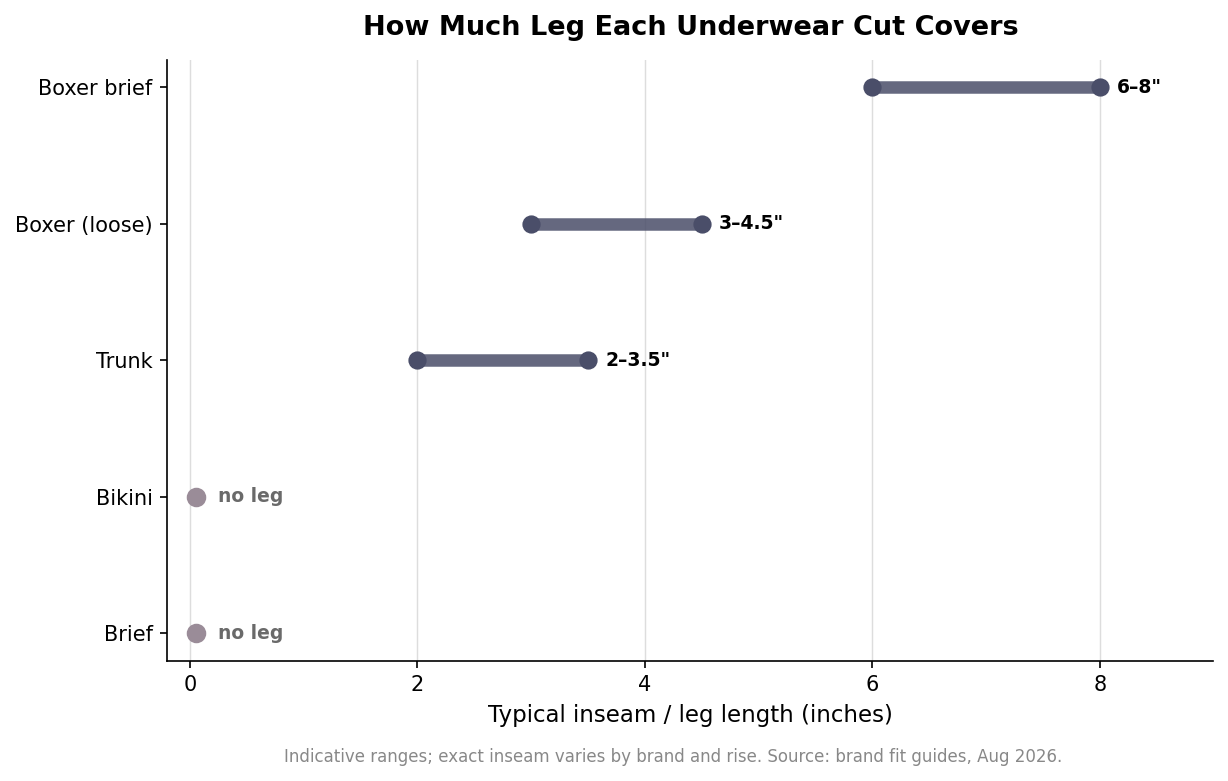
Briefs have no leg and a supportive front pouch. They use the least fabric, sit compactly, and suit athletic, minimalist, and value-focused runs where coverage is not the point. Bikini or micro briefs are cut even lower and narrower, a fashion-forward style with slight coverage that appeals to a specific market rather than a general one.
Trunks are the short-legged, square-cut middle ground: a fitted leg with only a couple of inches of inseam, which flatters shorter frames, works well under slim trousers, and reads as modern. Boxer briefs are the mainstream default, a fitted cut with a longer six-to-eight-inch leg that prevents ride-up, supports movement, and is what most people picture when they hear custom underwear. Boxers are the loose, woven, full-coverage option built for lounging and light activity rather than support, and they behave more like a soft short than a fitted base layer.
Match the cut to the wearer and the occasion
Once you see the cuts side by side, the selection almost makes itself if you start from the audience rather than the aesthetic. For an athletic or activewear run, boxer briefs win because the longer fitted leg controls chafe and stays put during movement; trunks are a reasonable warm-weather alternative. For an everyday retail line aimed at a broad adult audience, boxer briefs again carry the most volume, with trunks as the style-conscious second option. For a promotional giveaway where cost per unit and universal appeal matter more than fit precision, briefs or loose boxers stretch the budget and offend no one. And for a hospitality or amenity program, loose boxers or simple briefs in a soft, easy-care fabric fit the disposable-yet-comfortable brief that hotels actually want. Choosing by occasion, not by what looks best on a model, is what keeps a bulk order from sitting in a warehouse.
How the cut changes your branding
The cut also decides where and how you can print, which is easy to overlook until the proofs come back. Fitted styles, trunks and boxer briefs, give you a clean, flat leg band and a smooth panel that show a logo or an all-over pattern crisply, and they pair naturally with a branded elastic waistband. Loose boxers offer more total surface area but a rumpled one, so detailed artwork can distort in the drape and they lean toward simple prints or a strong waistband instead. The decoration method follows the fabric as much as the cut: dye sublimation, which is how vivid all-over designs are achieved, needs a polyester or microfiber base and will not take on cotton, while screen printing or heat transfer handles logos on cotton blends, and a woven or jacquard waistband carries a brand name durably regardless of the cut. Decide the branding and the cut together, not in sequence.
Do not forget the size run
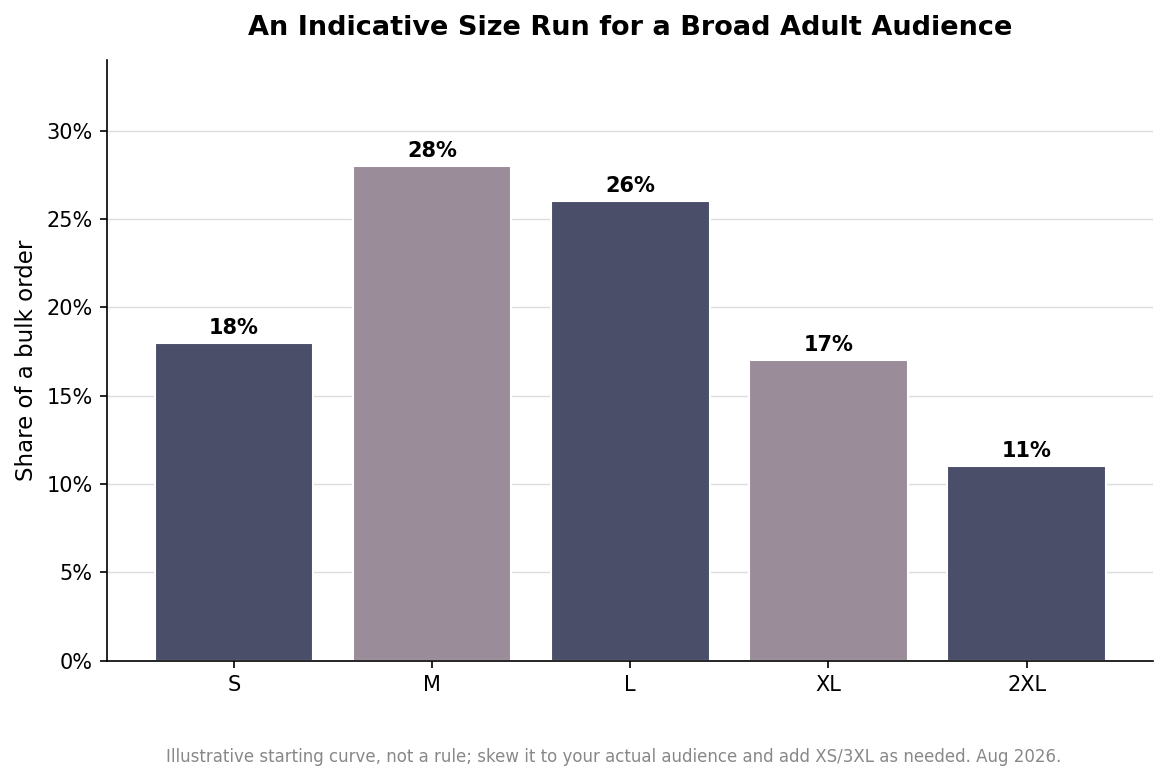
Choosing a cut is only half of a bulk decision; the other half is how many of each size you order. A run that is heavy on smalls or short on the middle sizes leaves you with unsellable stock and stockouts at the same time. Most adult programs cluster demand in medium and large, taper toward the ends, and cover roughly small through double-extra-large as a baseline, with extra-small and triple-extra-large added when the audience is broad or specific. Treat any generic size curve as a starting point and skew it toward your real customers: a young athletic audience runs smaller, a general retail audience runs larger, and a corporate order should be sized off an actual headcount whenever you can get one.
A simple way to decide
If you want a shortcut, work through three questions in order. First, who wears it and when, which points you to a cut: fitted and long for activity, short and fitted for style, loose for lounging, minimal for budget. Second, what is the fabric and the print, because an all-over sublimated design forces a polyester base while a printed logo is happy on cotton, and the two are not interchangeable. Third, what is the size spread of the people receiving it, which sets your order quantities before you ever confirm a color. Answer those three and the specification writes itself. Get them in the wrong order, lead with the look, and you end up with a beautiful product that the wrong people were sized for. The cut is not a detail at the end of the process; it is the decision the rest of the order hangs on.